
Client: Telenor Serbia & Montenegro
Reimagining the Customer Relationship in Serbia
Clarity, trust, and shared control in a post-authoritarian context
Introduction
In Serbia and Montenegro, Telenor had high brand loyalty — but low engagement. Customers often struggled to understand what they were paying for, felt overwhelmed by subscription complexity, and lacked transparency across channels. Underneath this, our research revealed a deeper issue: people were culturally conditioned to distrust authority, shaped by a post-Yugoslav legacy where questioning institutions was seen as futile.
We set out to help Telenor build trust not just through UX, but by shifting the power dynamic. I led a full-scale international research study across B2C, B2B, and internal channels, surfacing systemic blockers and reframing what a transparent customer relationship could look like.
Mapping the internal and external experience
We conducted a full-scale research effort across all touchpoints in Telenor Serbia. From in-store agent interviews to customer shadowing and stakeholder sessions, we captured the experience from both inside and outside the organisation. This holistic view helped reveal misalignments between what Telenor intended to offer — and what users actually experienced.
Outcome:
7 stakeholder interviews, 10 agent interviews, 15 B2B and 15 B2C customer interviews
Cultural patterns shaped how we designed trust
Beneath the surface, we uncovered cultural dynamics that shaped how users interacted with telecom services. A deep-rooted distrust of authority and institutional complexity led users to avoid confrontation and accept confusion. Bills went unquestioned. Plans remained unchanged. These insights shaped our strategy: transparency wasn’t a UX goal — it was a social need.
Outcome:
Reframed the service problem around power, agency, and information asymmetry
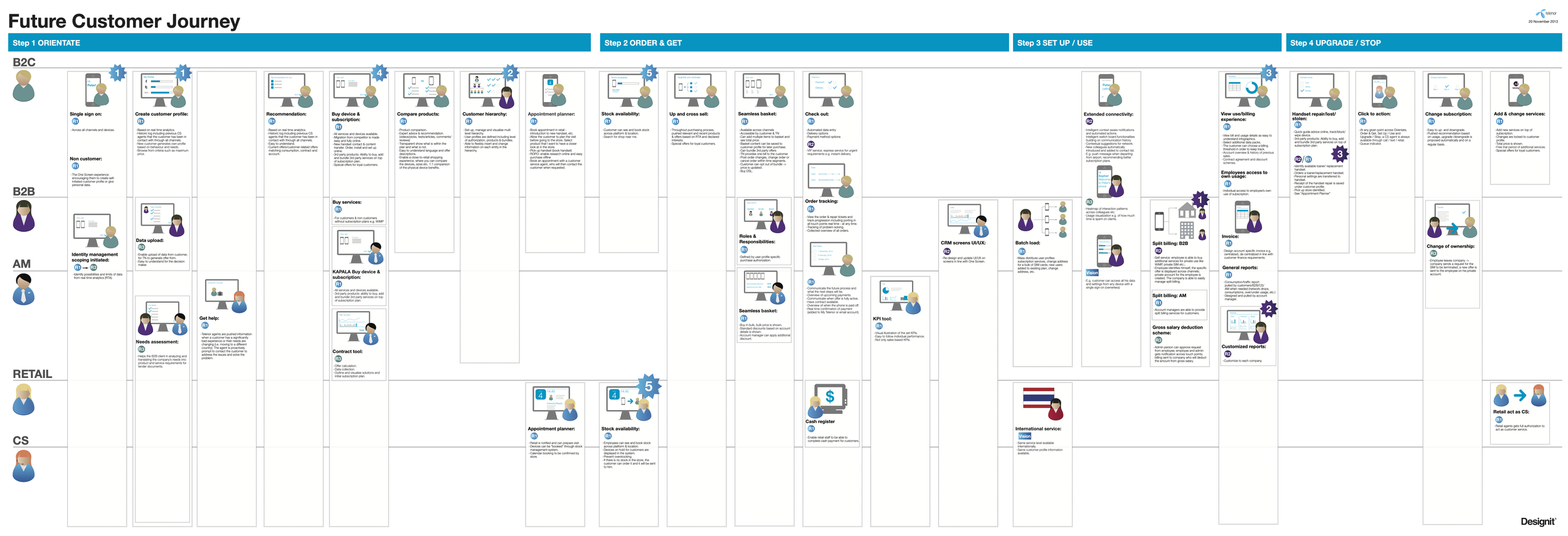
Designing shared control through One-Screen
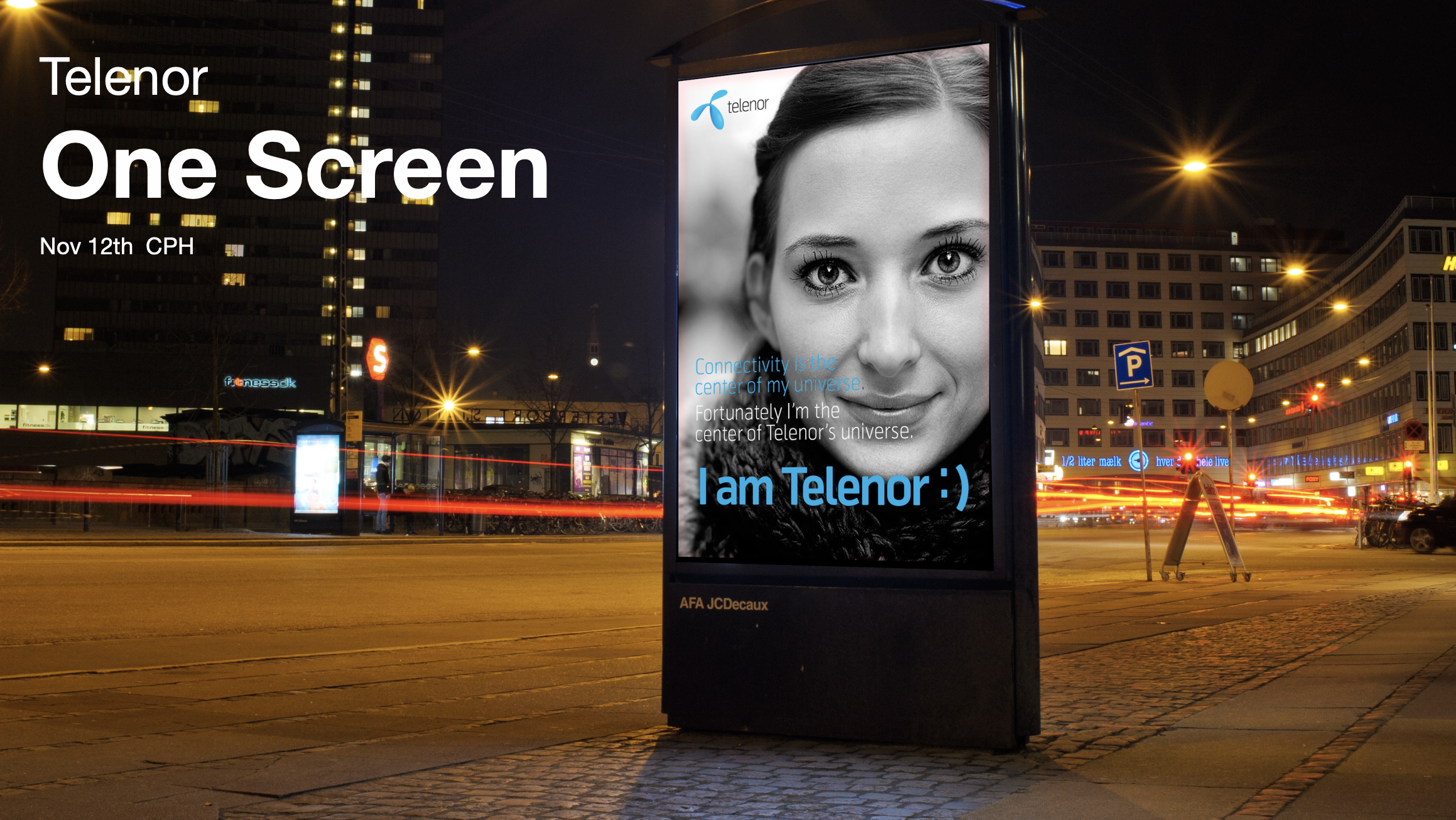
We translated our insights into a shared interface concept — One-Screen — that aligned agent and customer in real time. By surfacing the same information to both parties, it shifted the retail conversation from top-down explanation to mutual understanding. Agents became guides, and customers felt back in control.
Outcome:
Piloted across Telenor retail with strong internal buy-in and continued scaling
Client: Telenor SRB/MNE
Role: Design Researcher (Designit)
Year: 2015
Overview
In 2015, Telenor aimed to deepen customer relationships in Serbia and Montenegro, where mobile users still held low digital expectations and analog mindsets dominated. As a lead researcher, I conducted immersive fieldwork and service audits across markets, uncovering surprising truths about customer trust, service perceptions, and the readiness for digital migration.
Key insights
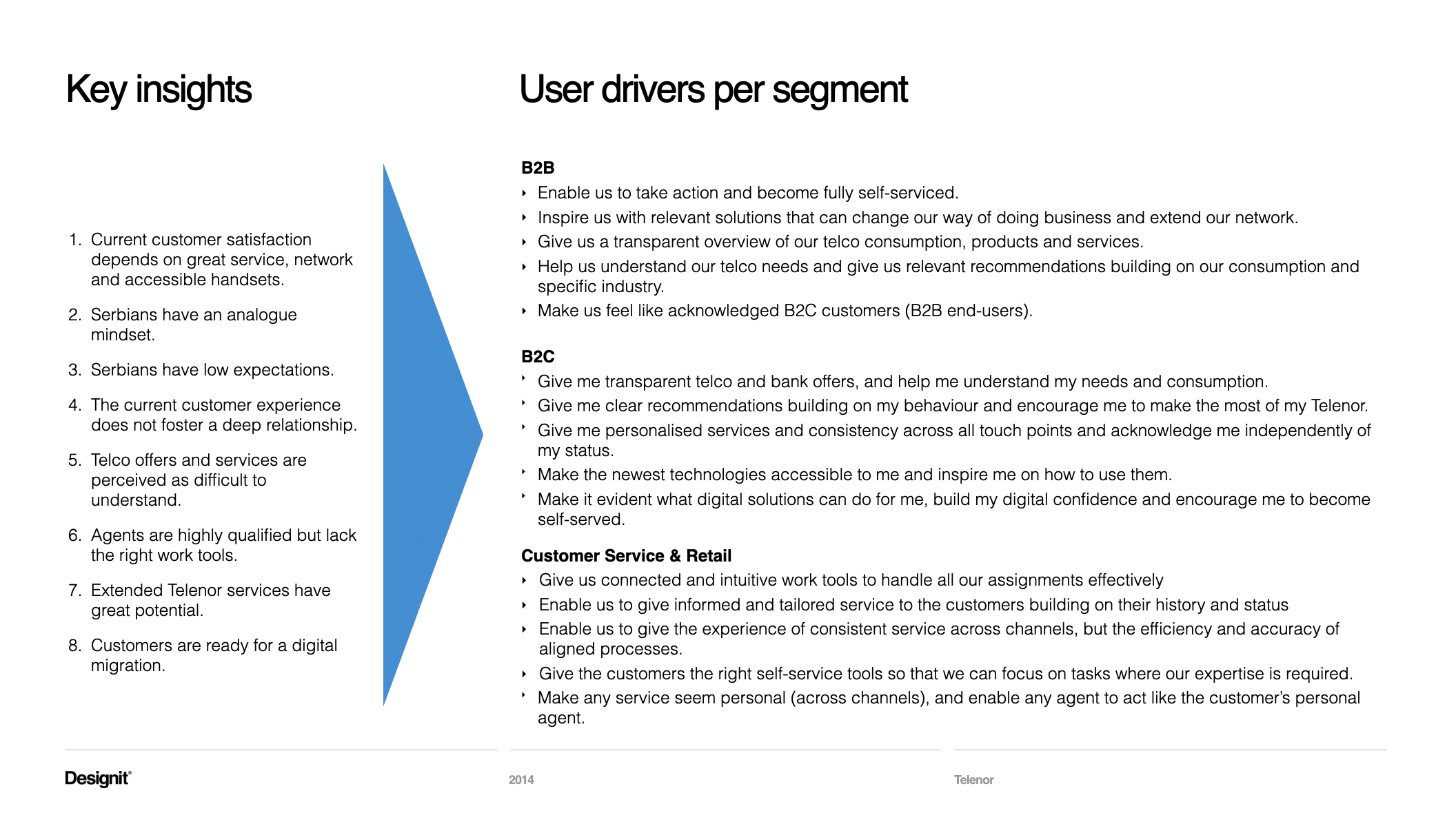
Customers were satisfied with basics (service, network, handsets), but had very low expectations of digital engagement.
Analog habits prevailed, with agents acting as the primary touchpoint for all interactions.
Agents were skilled but under-equipped, lacking tools to offer more proactive support.
Signs of distrust in the brand were emerging—customers felt under-informed and disconnected.
There was untapped potential in extended digital services—customers were ready, if guided.
Strategic direction
We designed One-Screen, a shared digital product for agents and customers. By surfacing the same real-time information on both sides, One-Screen transformed the retail interaction into a transparent, co-owned dialogue. It shifted the agent from a gatekeeper to a trusted advisor.
Impact
One-Screen became a core service tool and cultural shift for Telenor—simplifying processes, strengthening trust, and anchoring the brand in a new digital relationship model.